
Mold Remediation in San Mateo and San Francisco
Mold remediation means finding the water that fed the mold, sealing the area off, taking out what the mold has grown into, and checking the result with a clearance sample that an independent laboratory analyzes. AquaShield is a MICRO certified mold remediation contractor, and the same company rebuilds the wall once it clears.
Mold is rarely a 2am emergency, but the leak behind it can be. An on-call technician answers, day or night. We work across San Mateo, San Francisco, Santa Clara and Alameda counties.
Signs you need this
How a mold remediation job runs
- 1Find the waterMoisture readings and the source of the leak come first. We are plumbers too, so the repair usually happens on the same job.
- 2Test beforeBefore anything is disturbed, we take a baseline air sample and send it to an independent laboratory.
- 3ContainPlastic sheeting, a zipper door and negative air keep spores inside the work area.
- 4Remove and cleanMoldy drywall, panels and base come out, often down to the framing. What stays gets cleaned.
- 5ClearanceAfter removal, we take a second air sample and the independent lab analyzes it. The plastic stays up until the result clears.
- 6RebuildInsulation, drywall, texture and paint, done by the same company.
Do you need a remediator, or can you clean it yourself?
If the mold covers less than about 10 square feet, sits on a hard or painted surface, and came from clean water that has since been fixed, EPA's home guidance says you can usually handle it yourself. Ten square feet is roughly a 3 by 3 foot patch.
Call a remediator when any of these is true:
- It covers more than about 10 square feet, or you keep finding more of it
- It is inside a wall, under flooring or in the insulation
- It grew after a sewage backup or floodwater, which EPA says needs a professional
- Someone in the house has asthma, allergies or a weakened immune system
Picture a 2 by 2 foot gray patch on a bathroom ceiling, over a shower whose fan quit last winter. That is about 4 square feet of surface mold from steam. Fix the fan and clean it yourself. Now picture the same patch with a soft spot in the drywall and a toilet upstairs that has rocked for a year. That ceiling gets opened, because the water is coming from above.
If you cannot tell which one you have, start with a mold inspection.
Mold follows water, so the leak gets fixed first
Mold grows where material stays wet, so removing it without fixing the water just schedules the next job. EPA puts it in one line: the key to mold control is moisture control.
AquaShield sends a plumbing van and a remediation van to every job, so the supply line, drain or valve behind the mold is usually repaired on the same visit. Before anyone cuts, meters and a thermal camera show how far the wet area really runs, and the cut lines follow those readings.
Containment: how the room gets sealed off
Containment is a sealed plastic enclosure around the work area, kept under negative air pressure so air flows in and spores do not drift into the rest of the house. EPA's mold remediation guide scales it to the size of the job, and gives a check anyone can do: when containment is working, the plastic billows inward.
How containment works. The layout changes with the room; the principle does not.
- The affected wall or cabinet is opened inside the sealed area, and nowhere else.
- An air scrubber pulls air out of the work area and exhausts it outside the containment. That is what negative air means.
- People and tools go in and out through a zipper door, so dust stays on the work side.
- Because air is being pulled out, a gap in the plastic draws clean air in. It does not push spores out into the house.
| Area of mold | What EPA calls for | In a house, that is often |
|---|---|---|
| About 10 square feet or less | A small, isolated area. The containment rules start above this size | A spot on a ceiling, one cabinet back |
| 10 to 100 square feet | Limited containment: one layer of plastic, a covered slit entry, negative pressure | One wall, a closet, the back of a kitchen run |
| Over 100 square feet, or a risk of spreading | Full containment: two layers of plastic and an airlock to go in and out | A whole room, a ceiling and its walls |
Source: EPA, Mold Remediation in Schools and Commercial Buildings, chapter 3. Checked 2 Oct 2026.
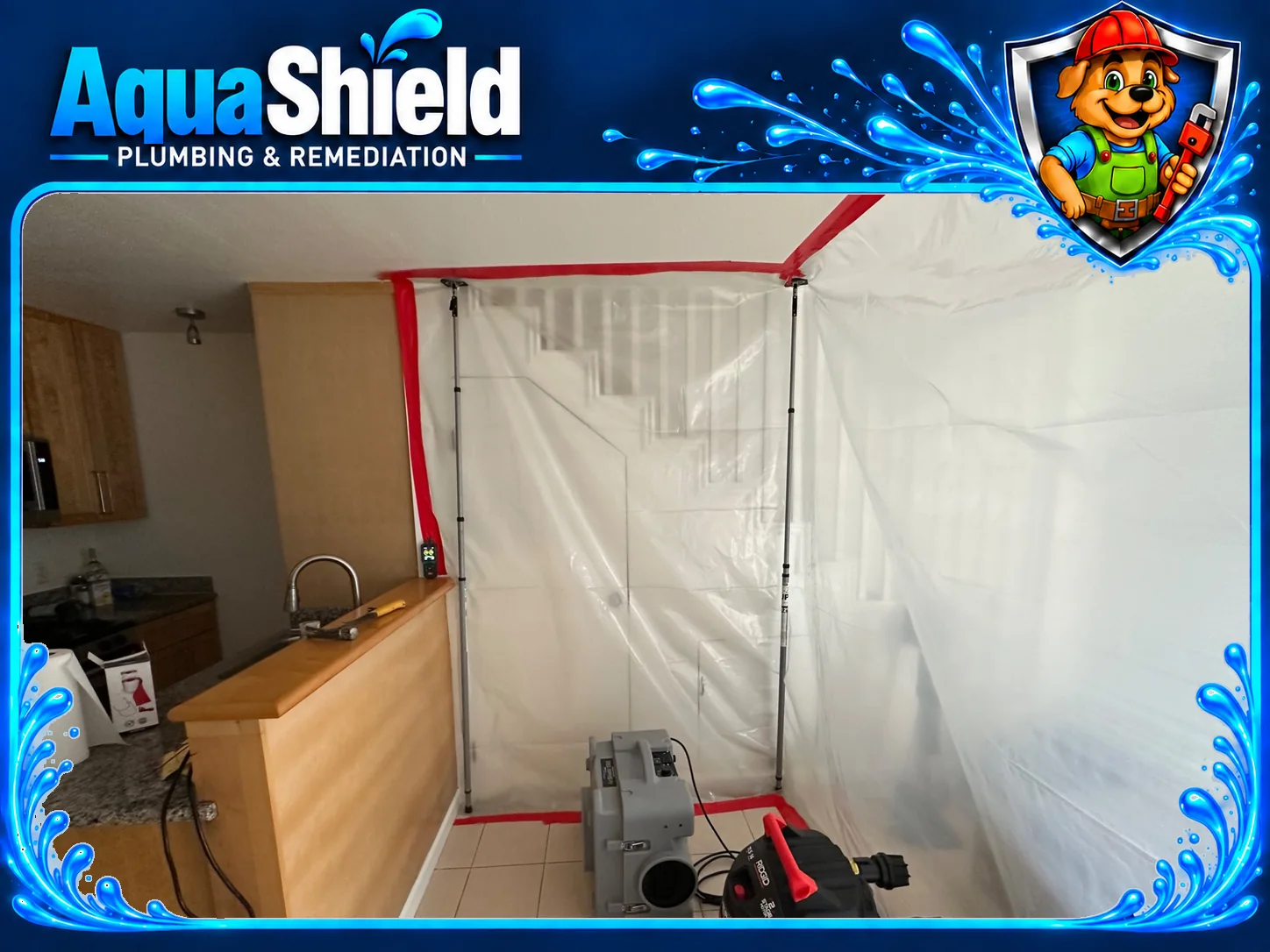
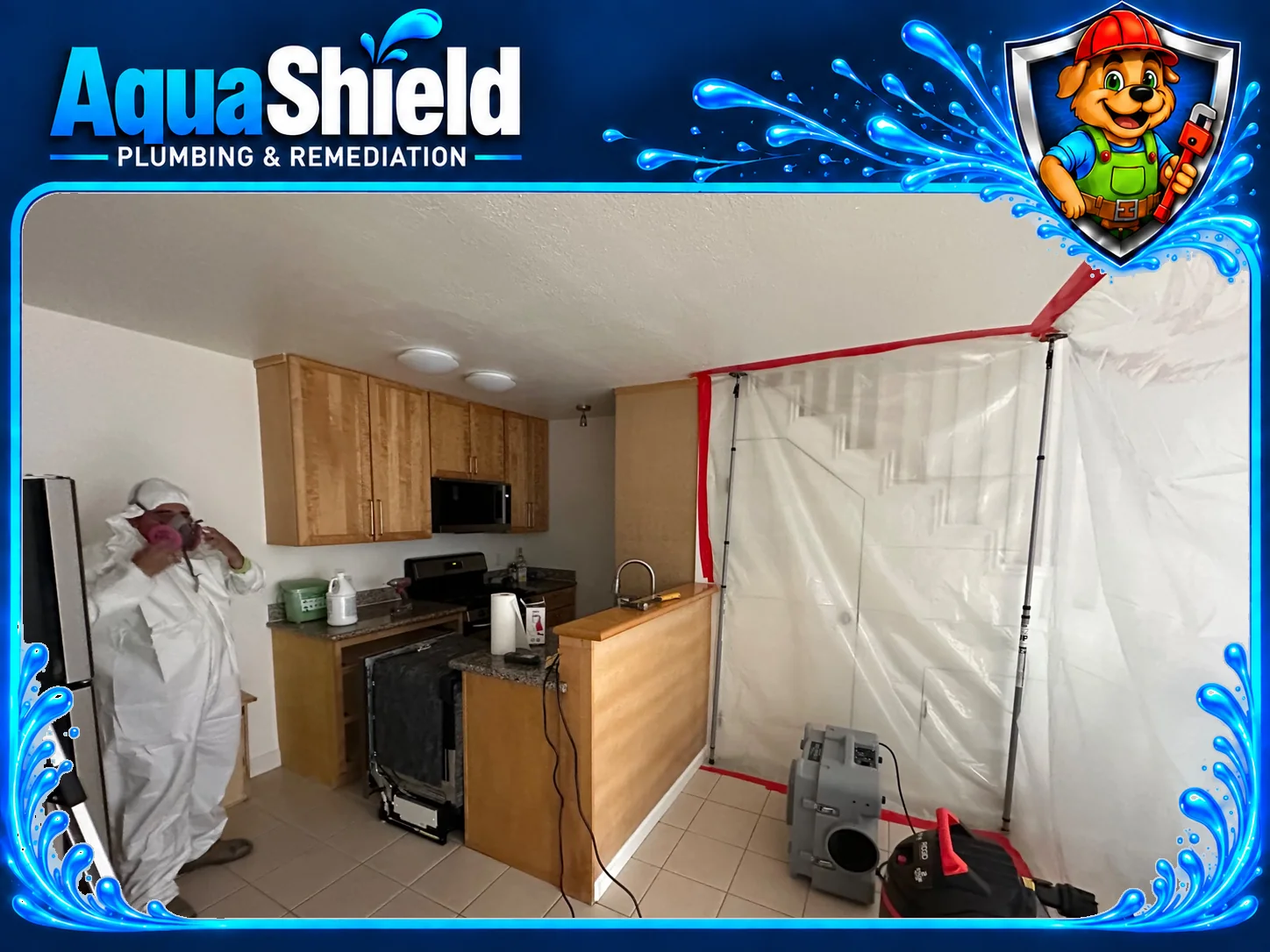
On the kitchen job further down this page, the whole kitchen was sealed with plastic and zipper tape, and an air scrubber was running before the island panel came off.
Removal: what comes out and what gets cleaned
Porous material that mold has grown into comes out: drywall, insulation, carpet pad and particleboard cabinet panels. Solid material like framing lumber, tile and metal can usually be cleaned and kept. The same EPA guide explains why spraying bleach and painting over it does not work: "Dead mold is still allergenic."
| Material | Usually | Why |
|---|---|---|
| Drywall and ceiling board with growth | Comes out | Mold grows into the paper facing and the gypsum |
| Insulation | Comes out | It holds water and spores and cannot be cleaned |
| Carpet pad with growth | Comes out | It stays wet underneath after the carpet feels dry |
| Particleboard cabinet panels | Often comes out | It swells and holds moisture once wet |
| Framing lumber | Cleaned and dried, sometimes sanded | Solid wood can be cleaned if it is still sound |
| Tile, metal, glass, sealed concrete | Cleaned | There is nothing for mold to grow into |
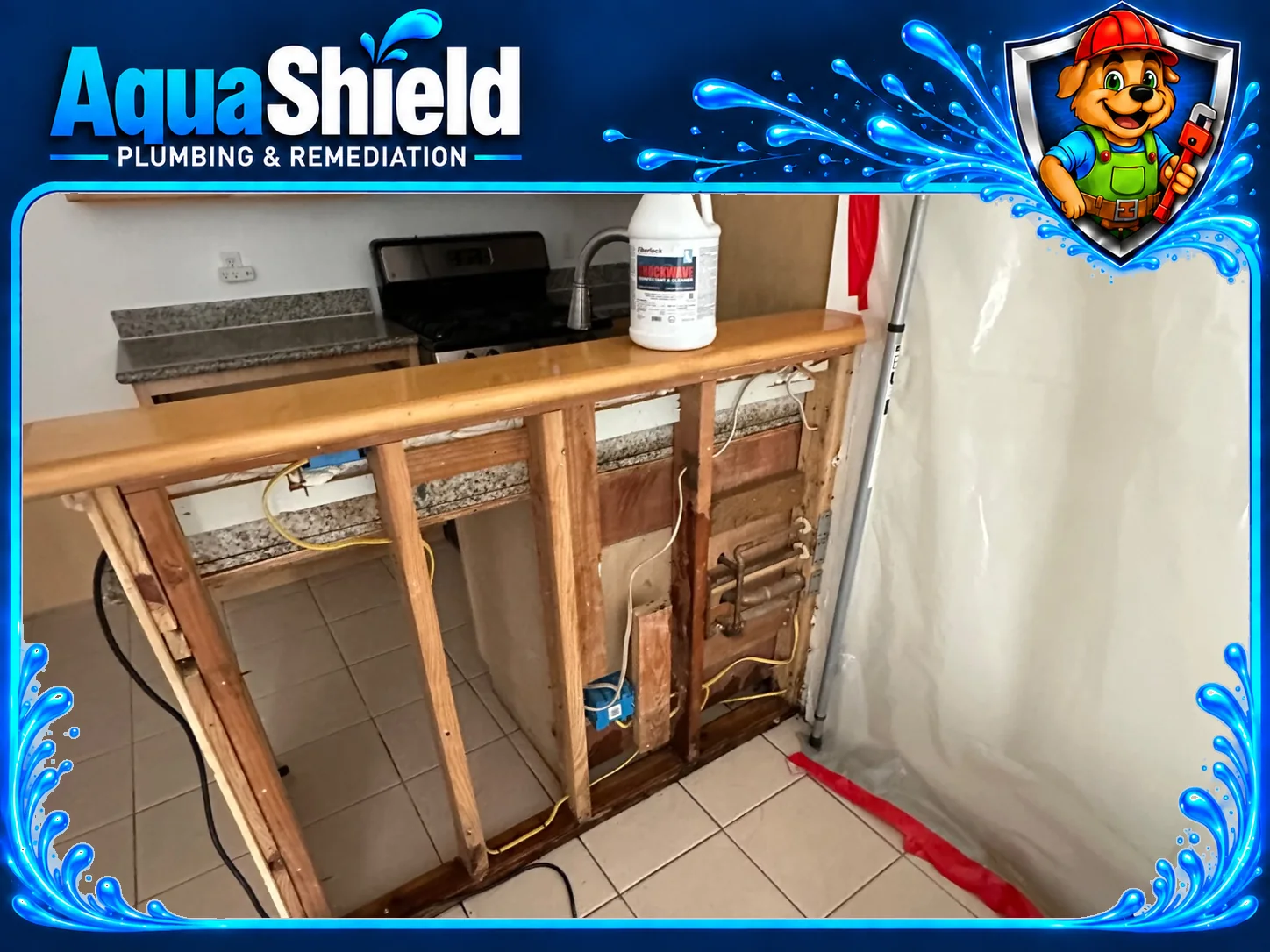
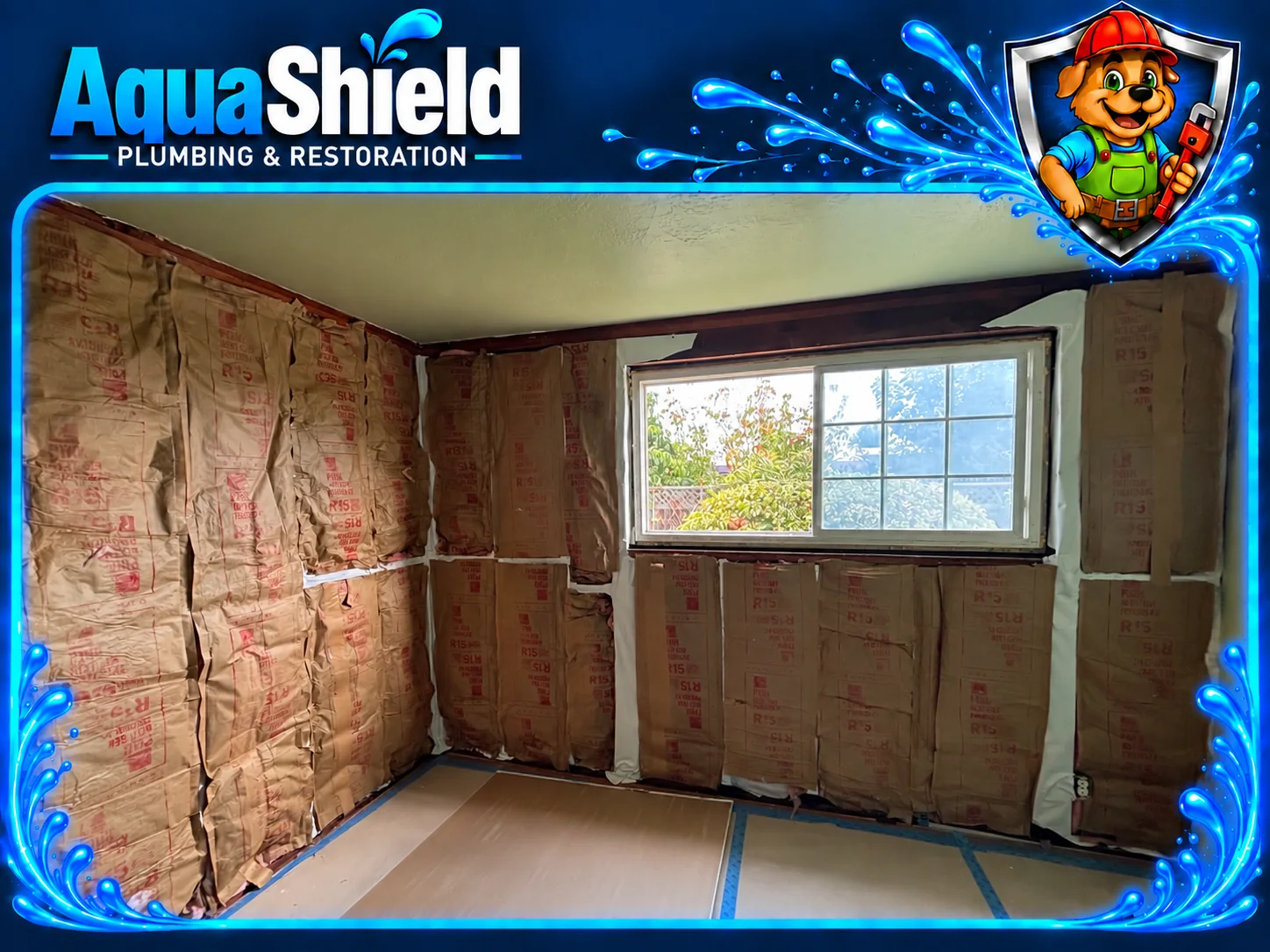
Mold inside a wall usually shows itself as a smell, a stain near the baseboard or paint that bubbles. On the bedroom job below, an exterior wall with no insulation in it was opened to the studs, insulated and closed back up.
Lab clearance: how you know it worked
Clearance is the test at the end. After removal and cleaning, with the plastic still up, we take a new air sample and an independent laboratory analyzes it, so the result does not come from us. That result is read against the sample taken before work started and against outdoor air.
There is no federal pass number to hit. EPA says no federal limits have been set for mold or mold spores, so the comparison is the test. Its guide describes the target: no visible mold, no moldy smell, and mold in the air similar in kinds and amounts to what is outside.
If the result does not come back where it should, the containment stays up and the work continues until it does.
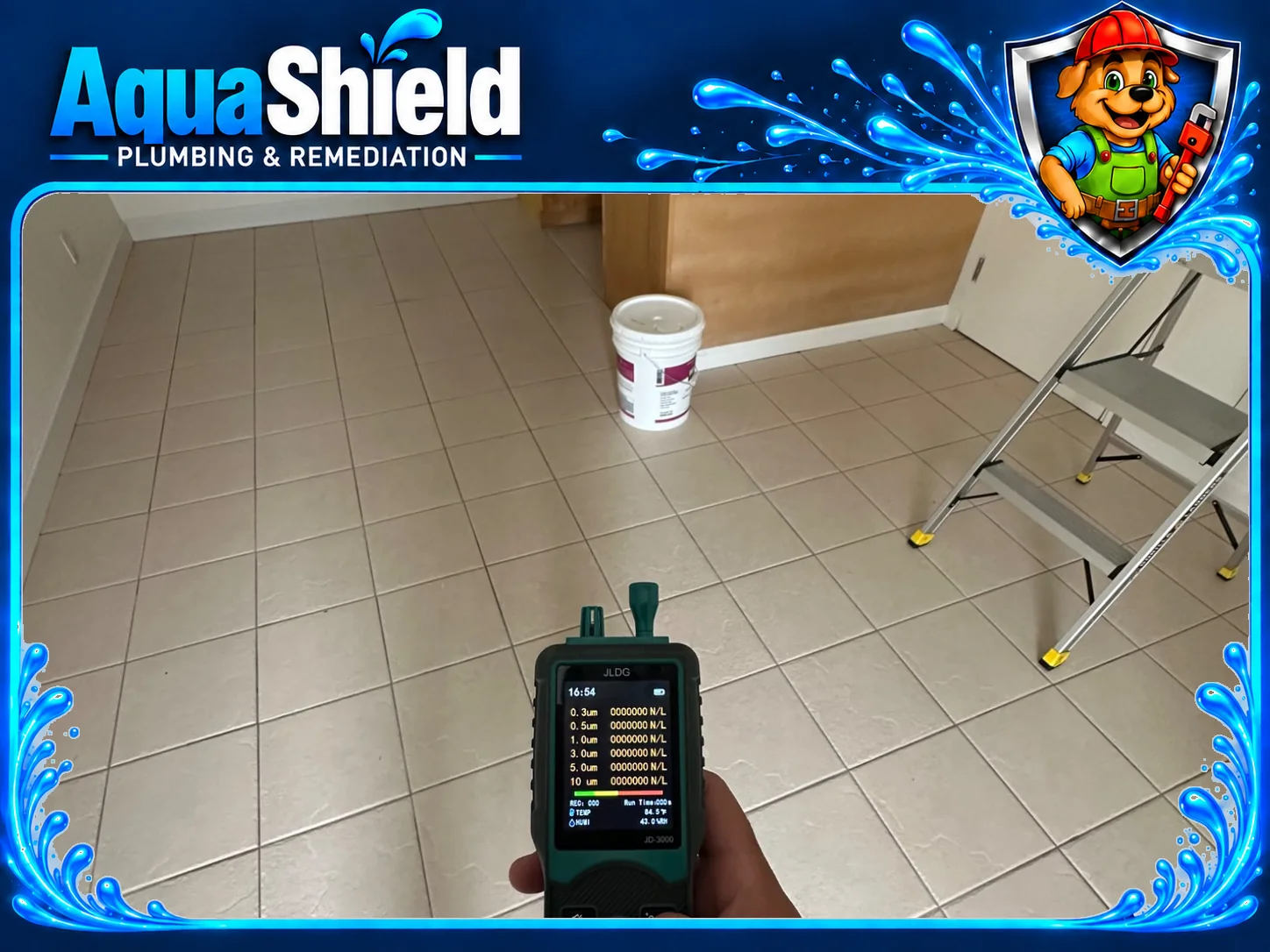
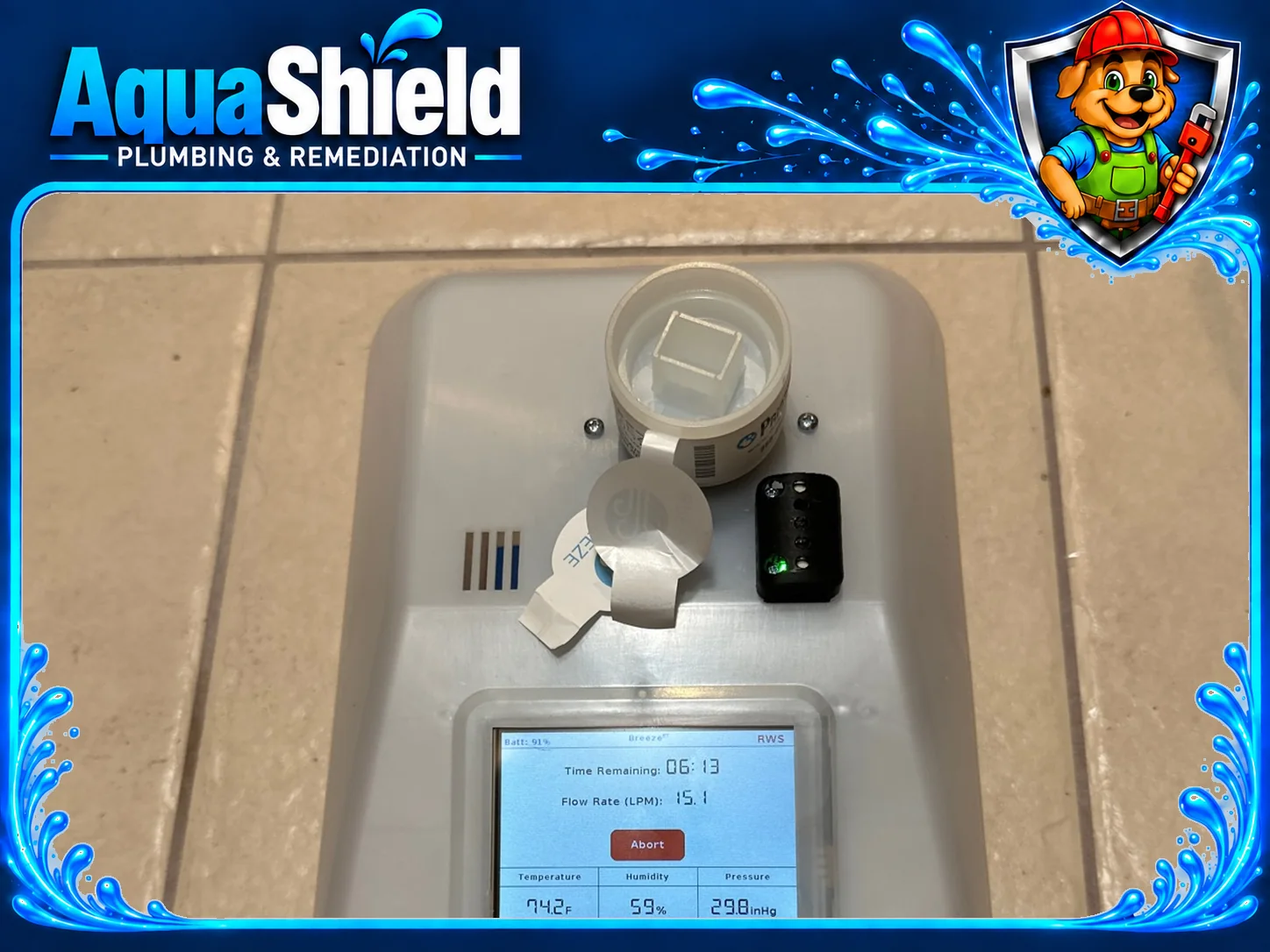
Every job leaves a file: daily moisture logs while equipment runs, pre and post remediation air quality logs, and the laboratory's air spore results. If your insurer, an HOA board or a buyer wants its own assessor on site as well, arrange it before work starts so the visit happens before the plastic comes down.
Say you are selling a condo and the buyer's inspector finds mold behind the bathroom vanity. The buyer's agent wants proof it was handled. What answers that is the file: lab results from before and after, and moisture logs showing the wall was dry before it was closed. For property managers and HOA boards, the same file closes the work order.
What decides the size of a mold job
Mold remediation cost comes down to how much material has to come out and how hard it is to reach, more than how alarming the mold looks. The big factors are the area of growth, whether it is inside walls or under floors, the containment that size calls for, and how much rebuilding follows.
Before you compare two quotes, check that each written scope lists:
- The rooms inside containment, and the containment level
- Each material coming out, room by room
- Air sampling before and after, and the laboratory that reads it
- What happens if clearance does not pass the first time
- Whether the rebuild is in the same contract or left to someone else
Picture two quotes for the same hall closet. One lists limited containment, two walls of drywall to the framing, air samples before and after, and rebuilding the closet. The other says "mold remediation" and a total. The second might be cheaper, but you cannot tell what it buys.
Equipment should come off when the readings say the job is done. Ask to see the daily logs that show it.
Does insurance cover mold remediation in California?
Usually only when the mold grew out of a covered water loss. The California Department of Insurance homeowners guide lists mold, and water damage caused by seepage or leaks, among the things a policy usually does not cover. Sudden and accidental water damage is on the list it usually does.
So the cause matters more than the mold. Say a supply line under the kitchen sink lets go on a Sunday, and mold turns up behind the cabinet when it is opened that week. That grew from a sudden loss, and depending on your policy's mold wording it may be handled with the water claim. A shower pan that has leaked a little every day for two years is seepage, which the same guide lists among the usual exclusions.
When it is covered, we send the documentation the adjuster asks for and negotiate the scope with them. The carrier pays you directly, and your deductible is set by your policy. Our insurance page walks through how a water damage claim runs, step by step.
After clearance, the same company puts it back
Plenty of remediation companies stop at clearance and leave you with an open wall and a list of contractors. AquaShield handles the reconstruction too: insulation, drywall, texture, paint and trim. The people who opened the wall are the ones who close it.
From recent jobs
Mold remediation
Kitchen mold, found behind the island
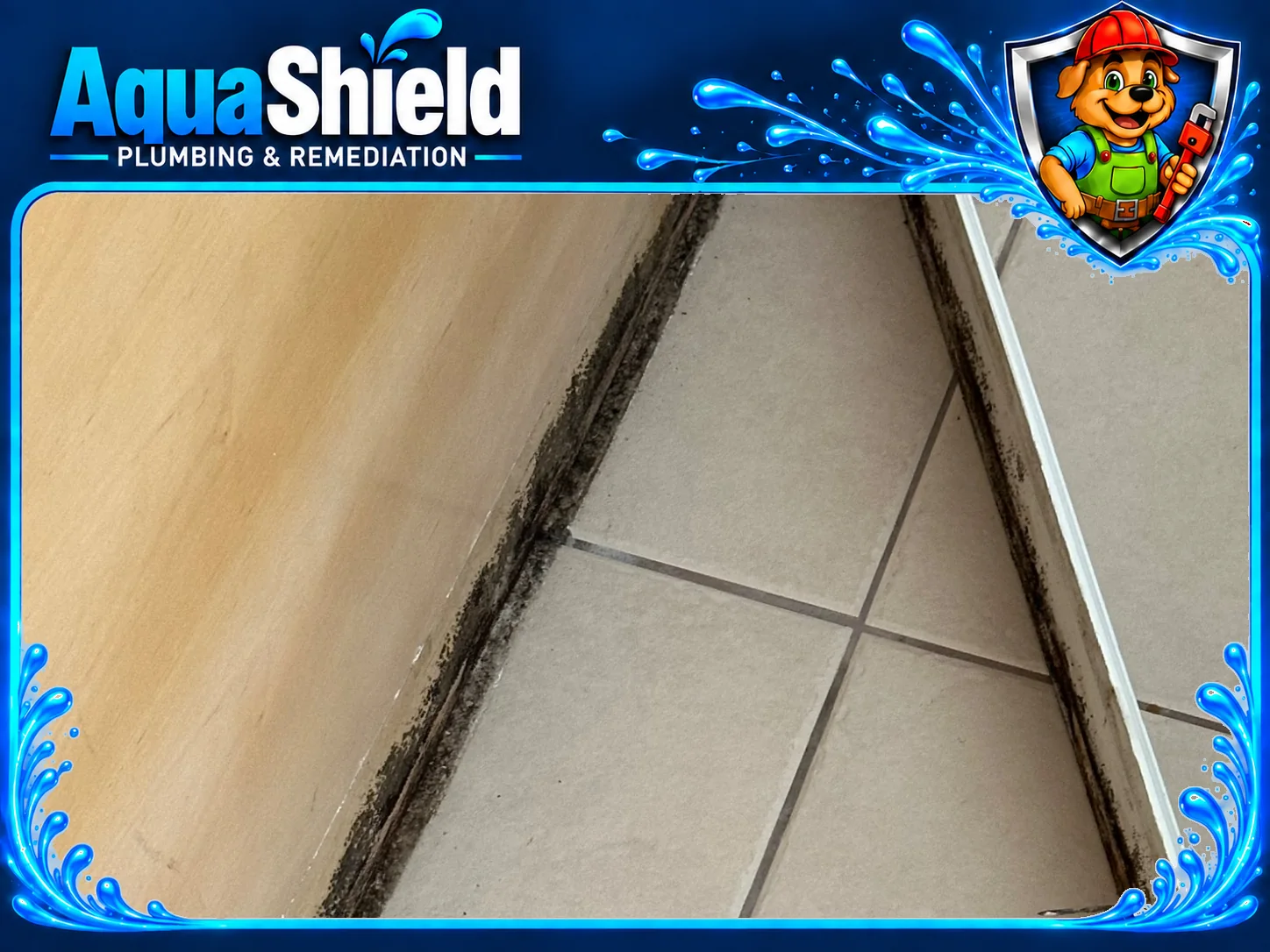
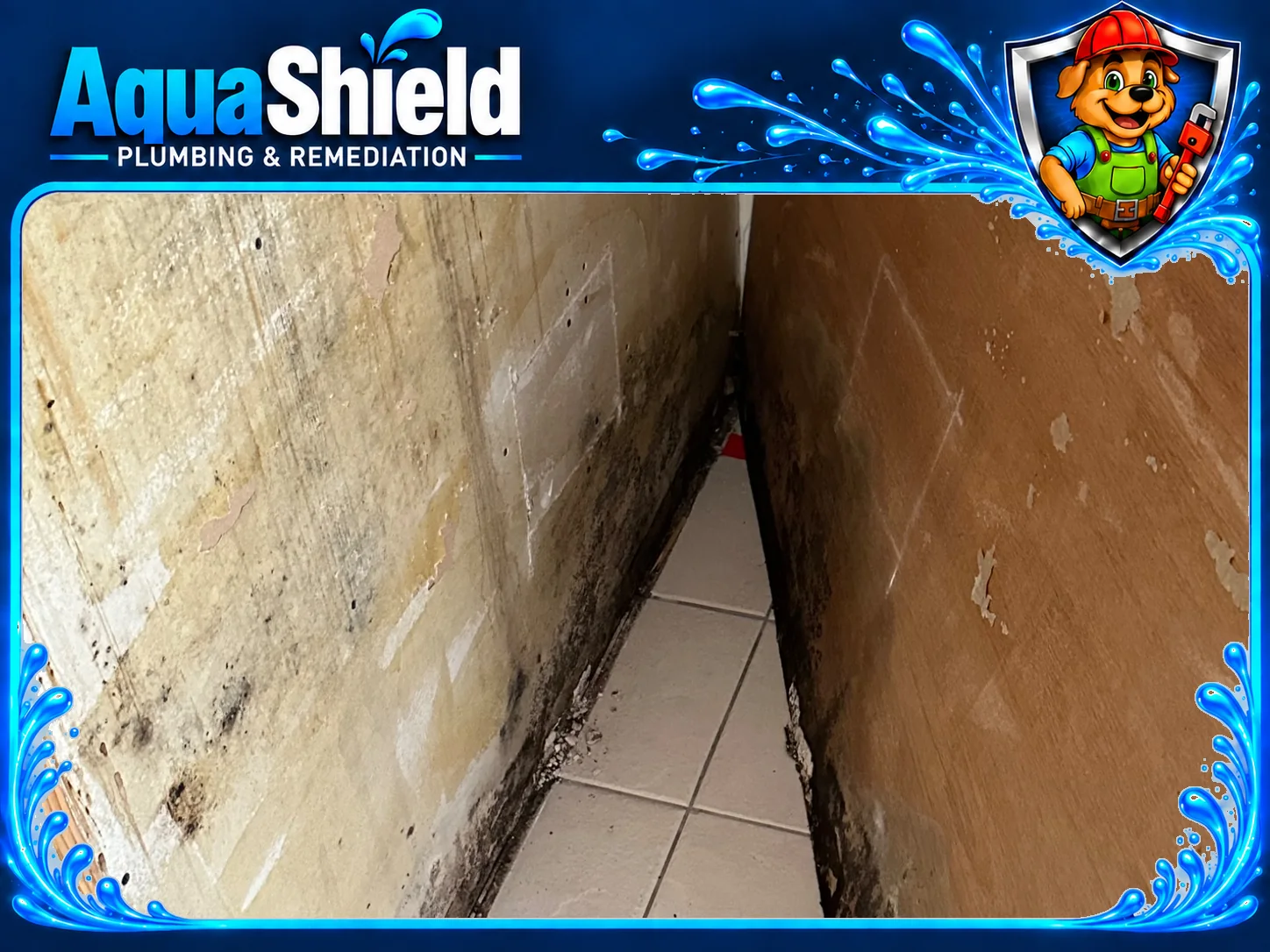
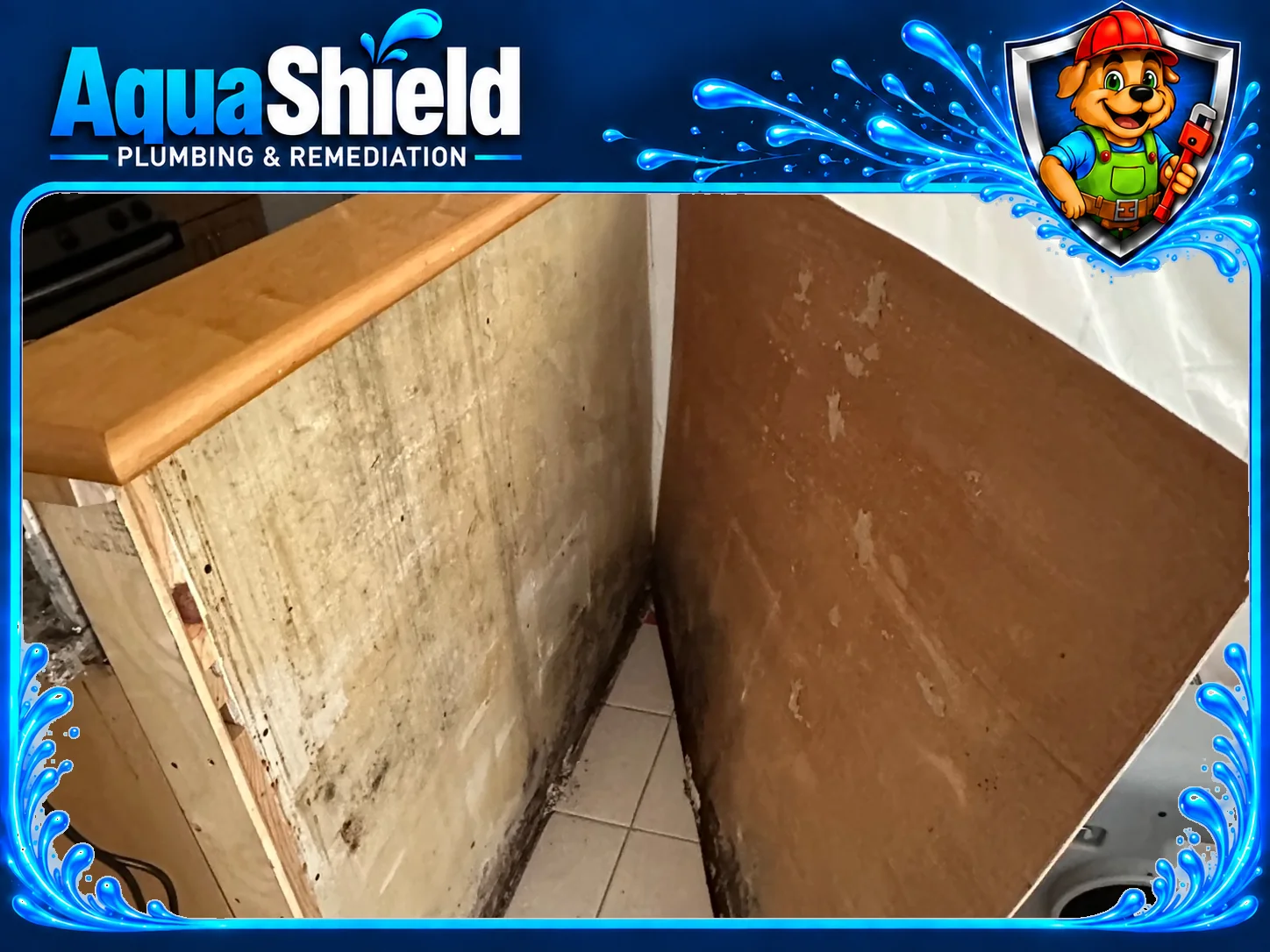
Mold was growing behind a kitchen island panel and along the base of the wall. The kitchen was sealed off in containment with an air scrubber running, the affected panel, drywall and base were removed down to the framing, and air samples were taken before and after.
-
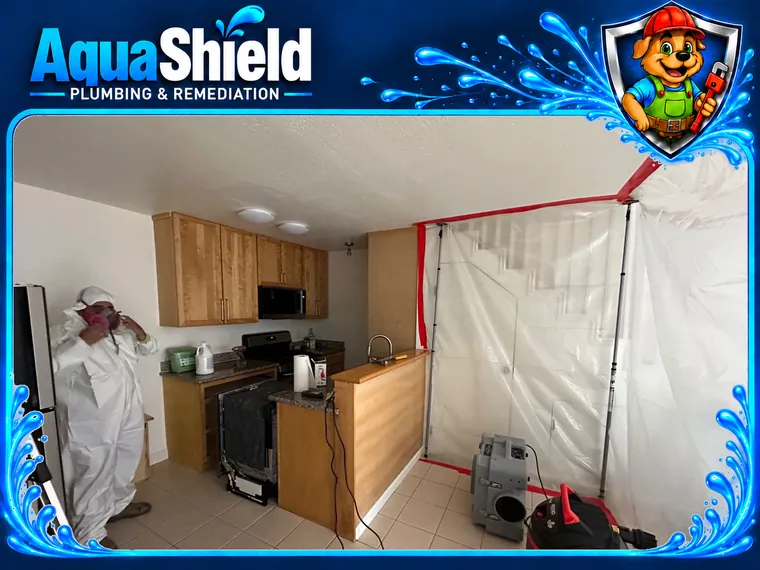
01Containment up, technician suited
-
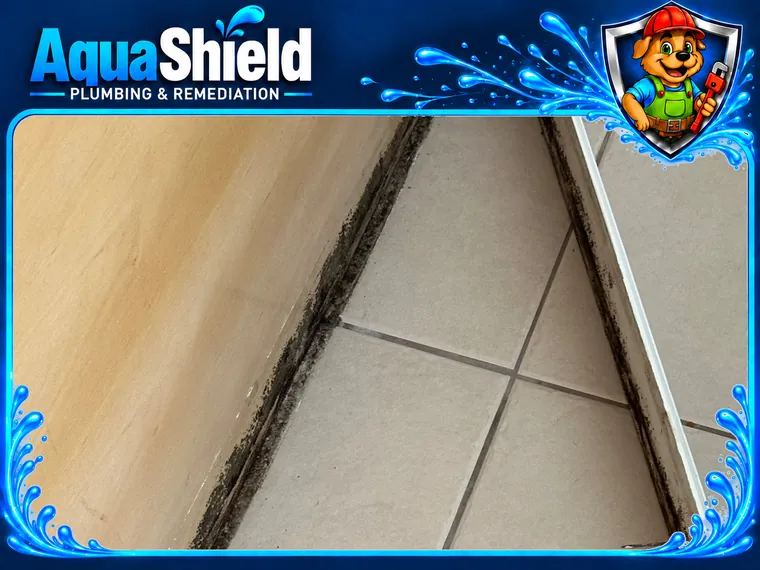
02Mold along the base of the wall
-
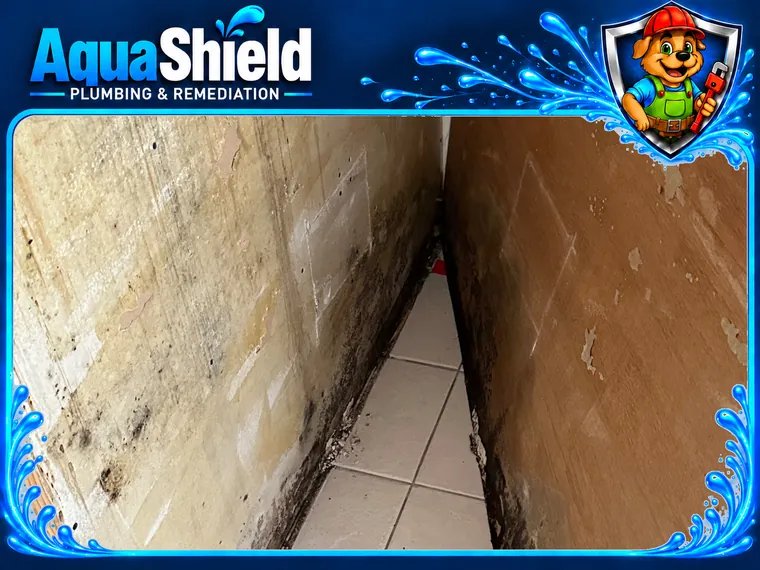
03Island panel pulled back: mold on both faces
-
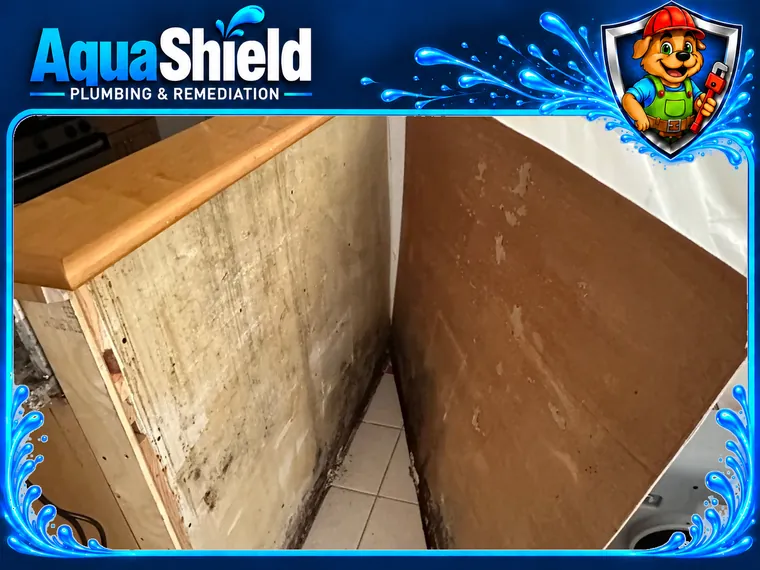
04The panel behind the island
Mold remediation + rebuild
Bedroom mold from an exterior wall with no insulation
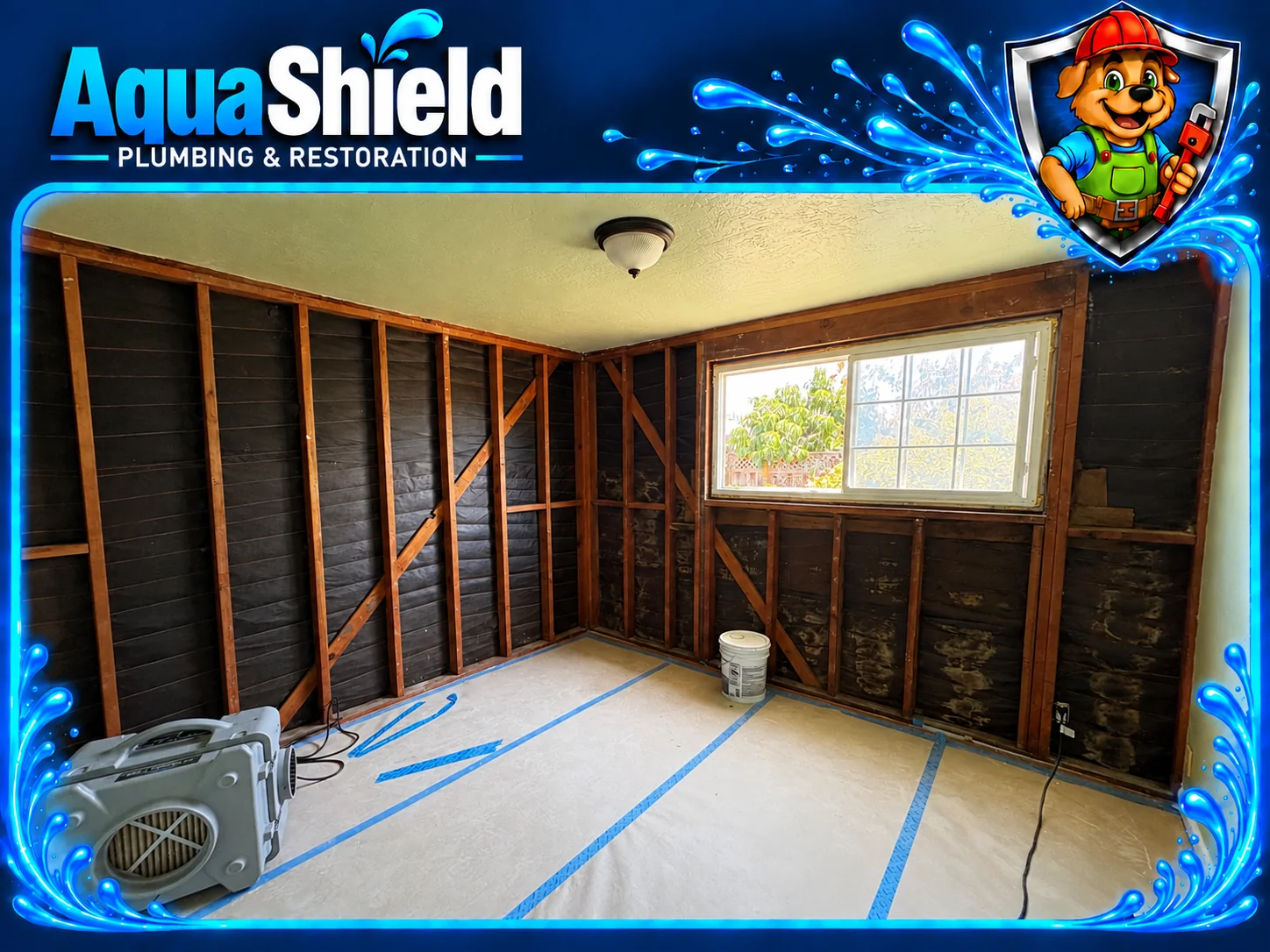
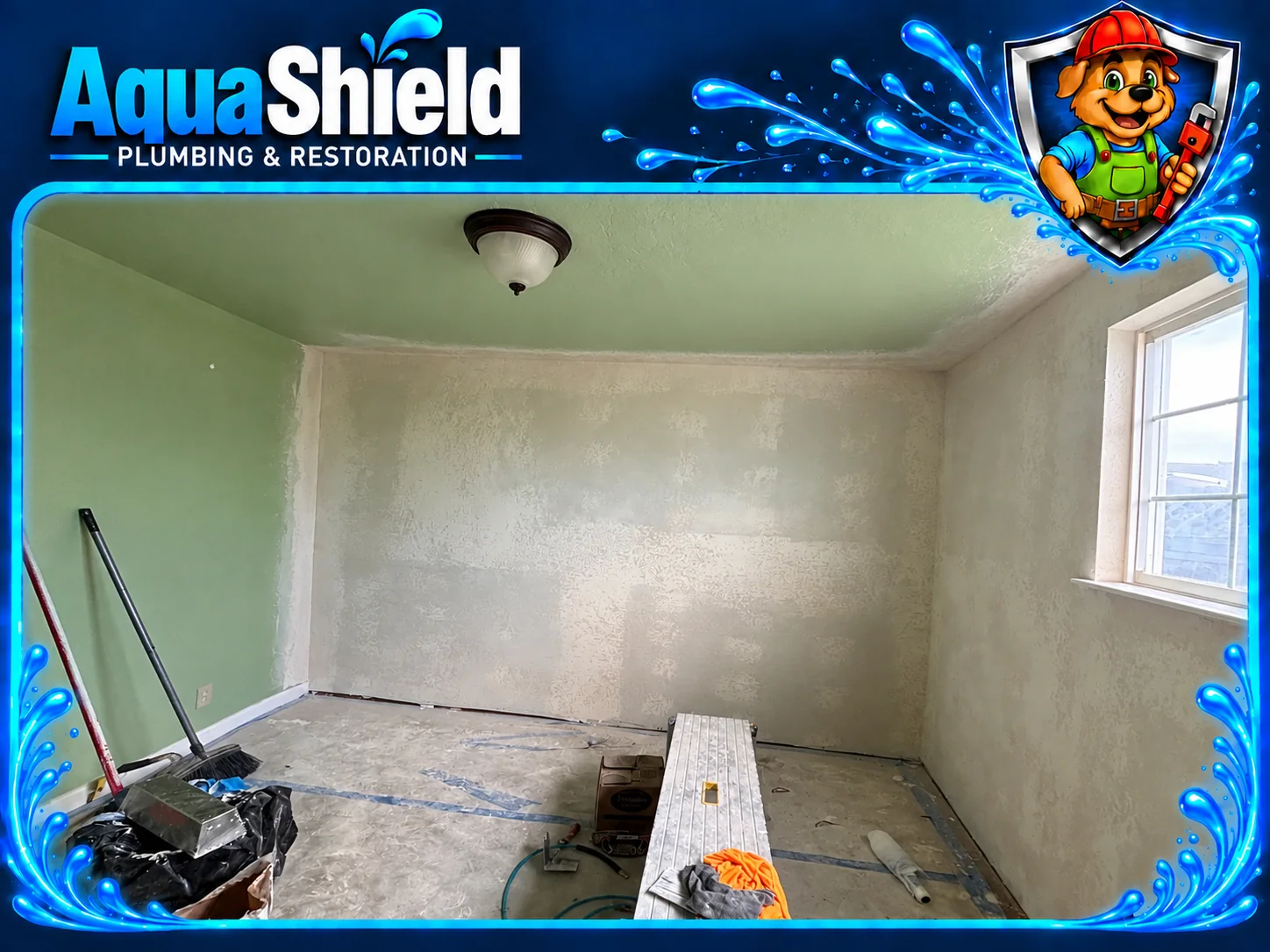
An exterior bedroom wall had no insulation, and mold followed. The wall was opened to the studs with the floor protected and an air scrubber running, then insulated and closed back up, ready for paint.
-
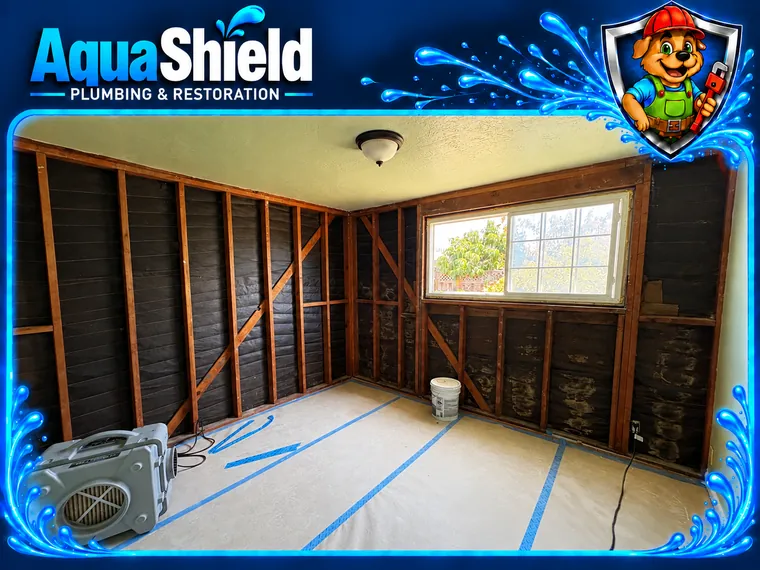
01Opened to the studs: no insulation in the wall
-
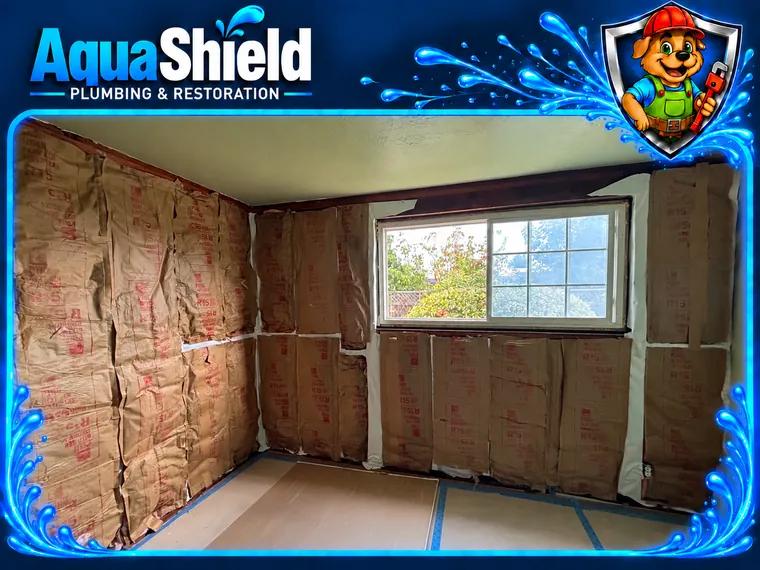
02New insulation in
-
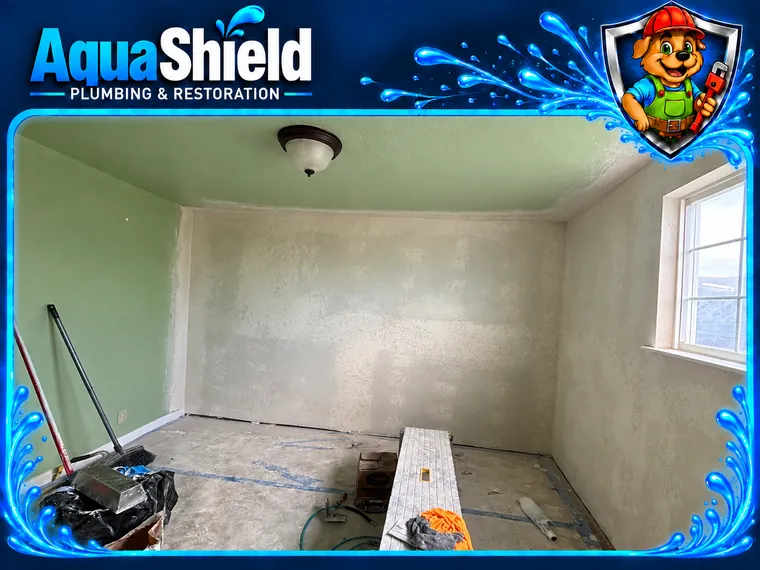
03Walls closed up and textured, ready for paint
Questions people ask us
What is the difference between mold removal and mold remediation?
Removal is taking out the moldy material. Remediation is the whole job around it: fixing the moisture, containing the area, removing and cleaning, then confirming with a clearance sample. Removal without fixing the water is how mold comes back.
Do I need mold testing before remediation?
Not to prove the mold is there. EPA says that in most cases, if you can see mold growing, sampling is unnecessary. A sample before work is still worth taking, because it gives the clearance sample something to be compared with.
Can I stay in the house during mold remediation?
For a job in one or two rooms, usually yes, because the work area is sealed and under negative air. Stay out of the work area itself. If someone at home has asthma or a weakened immune system, ask their doctor before deciding.
How long does mold remediation take?
It depends on how much material comes out, whether the wall still has to dry, and how quickly the laboratory returns the clearance result. The rebuild starts after clearance. Ask for the expected timeline in writing once the scope is set.
Do you test your own work?
We take the samples, but we do not read them. An independent lab analyzes the clearance sample, so the result does not come from us. The lab also analyzes the sample taken before work starts, and its reports go in your file. If you want your own assessor on site as well, arrange it before work starts.
Is black mold worse than other mold?
Color alone does not identify a mold, and the way it is handled is the same: fix the moisture, contain the area and remove it. If you need to know what it is, a laboratory sample can tell you.
What certifications does AquaShield have?
Exactly these two: MICRO certified mold remediation contractor, and IICRC WRT (Water Damage Restoration Technician).
Mold remediation with AquaShield, from the leak to the last coat of paint
One company finds the water, removes the mold under containment, checks the result with an independent lab and rebuilds the wall. If you have found mold or keep smelling it, ask for a mold remediation visit and the first thing we find out is whether it needs remediation at all.